
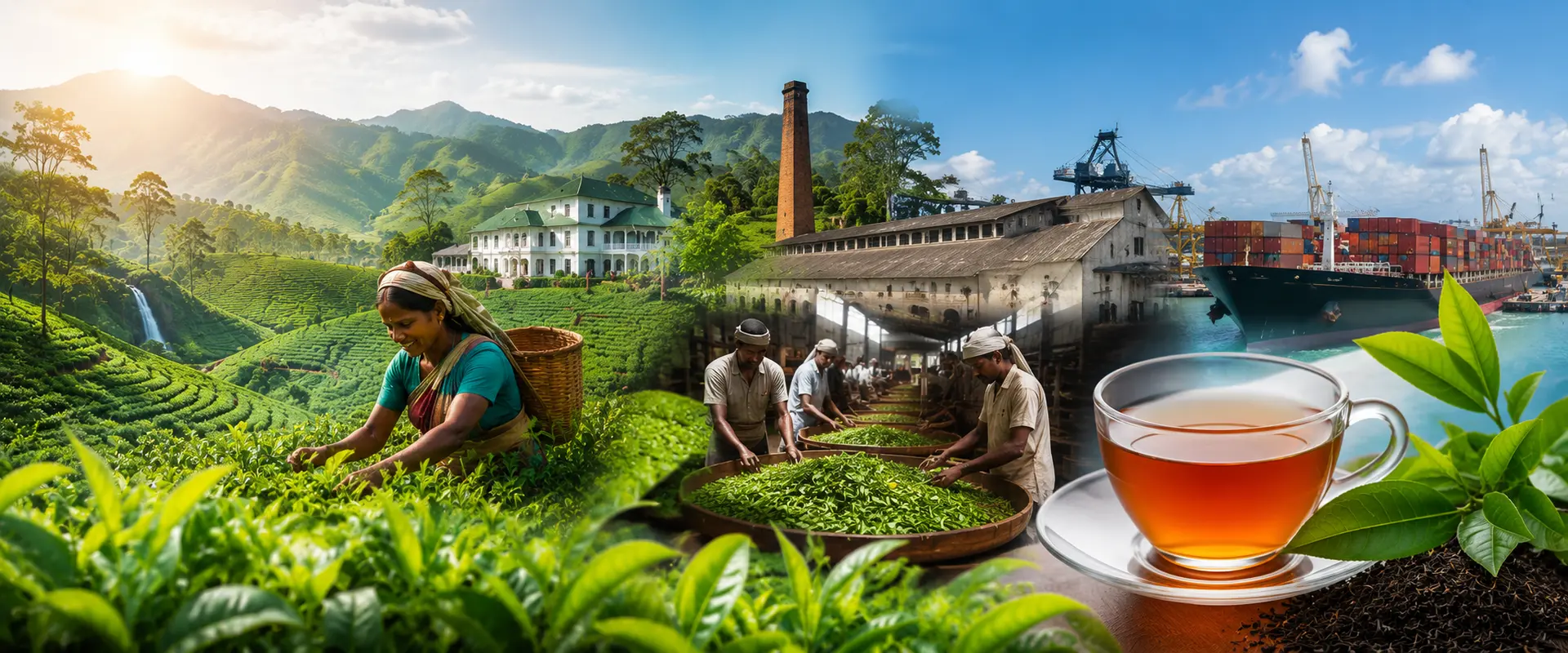
A History of Tea in Sri Lanka
From a coffee-farming island to the world's leading exporter of single-origin tea — the remarkable story of Ceylon tea.
Before Tea: An Island of Spice and Coffee
Long before the first tea bush was planted, the island we know today as Sri Lanka was famed among Arab, Chinese, and later European traders for its cinnamon, cardamom, and pepper. When the British took control from the Dutch in 1815, they turned their attention from spices to a more lucrative prospect — coffee. By the 1840s, the central highlands of Ceylon had been transformed into one of the largest coffee-producing regions in the world, exporting nearly 50 million kilograms a year at the industry's peak.
Coffee's Collapse
In the 1860s, Sri Lanka (then Ceylon) was a thriving coffee colony. Then Hemileia vastatrix — coffee leaf rust — swept through the plantations, wiping out nearly the entire crop in less than a decade. Planters faced ruin. Thousands of acres of once-productive land stood silent, estates were abandoned, and bankrupt owners sold at desperate prices. But the disaster also laid the foundation for what would become one of the most successful agricultural pivots in colonial history.
James Taylor and the First Tea Garden
In 1867, a young Scottish planter named James Taylor cleared 19 acres on Loolecondera Estate in Kandy and planted tea. His initial experiments were modest, but the quality of the leaf was extraordinary. Within a year, Taylor was processing tea in a converted coffee curing shed and shipping samples to London.
Taylor's genius lay not only in cultivation but also in relentless mechanical innovation. He designed his own rolling table, built a leaf-withering loft, and refined firing methods that would shape the industry for the next century. By the time of his death in 1892, the Loolecondera experiment had grown into a national transformation — over 160,000 hectares of Ceylon were now under tea, and the island was shipping more than 20 million kilograms of leaf each year.
Thomas Lipton and Global Scale
Scottish entrepreneur Thomas Lipton arrived in Ceylon in 1890 and saw the commercial potential. He bought distressed coffee estates cheaply, replanted them with tea, and built a vertically integrated supply chain from garden to grocery shelf. His "From the Garden to the Teapot" marketing campaign made Ceylon tea a household name across Britain and America.
Lipton's marketing innovations — brightly painted delivery carts, pre-packaged tins with weight and price printed on the label, and aggressive newspaper advertising — democratised tea for the working class. Where tea had once been a luxury reserved for the upper classes, Lipton made it the everyday drink of factory workers, dockers, and farmers across the English-speaking world.
The Colombo Tea Auction
Founded in 1883 and still running weekly today, the Colombo Tea Auction is the oldest and largest tea auction in the world. Every Tuesday and Wednesday, brokers and buyers from more than 60 countries bid on lots of freshly manufactured tea, with prices fluctuating according to quality, season, and global demand. For over 140 years, the auction has served as both the commercial and cultural heart of the Ceylon tea trade.
The Seven Growing Regions
Over time, the industry organised itself around seven distinct growing regions — each producing a tea with a unique character shaped by altitude, rainfall, and monsoon patterns:
- Nuwara Eliya — the highest region, producing delicate, floral, champagne-like teas.
- Uva — known for mellow, aromatic liquors touched by the dry eastern monsoon.
- Dimbula — crisp, bright, and full-bodied; the classic "Ceylon" character.
- Uda Pussellawa — medium-bodied with a rosy tinge and tangy finish.
- Kandy — mid-grown, strong, coppery, and malty.
- Ruhuna — low-grown, dark, and full-bodied with honey notes.
- Sabaragamuwa — similar to Ruhuna but with more caramel sweetness.
Our own estate at Wewelkandura sits within the Rathnapura region, at an elevation that gives our tea a distinctive balance of strength and brightness.
Wars, Nationalisation, and Renewal
The two World Wars brought both disruption and opportunity. British government bulk purchases kept the industry afloat during the 1940s, and tea became an important morale booster for Allied troops. After independence in 1948, land reforms in the 1970s nationalised many of the old British estates under the State Plantations Corporation. While the transition was turbulent, it also returned ownership of the land to the Sri Lankan people for the first time in over a century.
In 1992, many of these state-run plantations were privatised into Regional Plantation Companies, blending public oversight with private-sector efficiency — a model still used across much of the industry today.
Independence and the Tea Board
After independence in 1948, the newly formed Sri Lanka Tea Board took over quality regulation and promotion. The Ceylon Tea trademark — still one of the most recognised food brands in the world — was established to guarantee authenticity and origin. The iconic lion logo, stamped on every genuine pack of Ceylon tea, represents more than branding: it is a guarantee that the tea inside was grown, manufactured, and packed entirely within the island.
Ceylon Tea Today
Sri Lanka today produces around 300 million kilograms of tea annually, making it the world's fourth-largest tea producer and one of the top three exporters. Tea remains a cornerstone of the national economy — supporting more than one million livelihoods, directly or indirectly — and an enduring symbol of the country's resilience and craftsmanship.